Sundara Chozhar’s guilt and trauma over Mandhakini’s supposed death
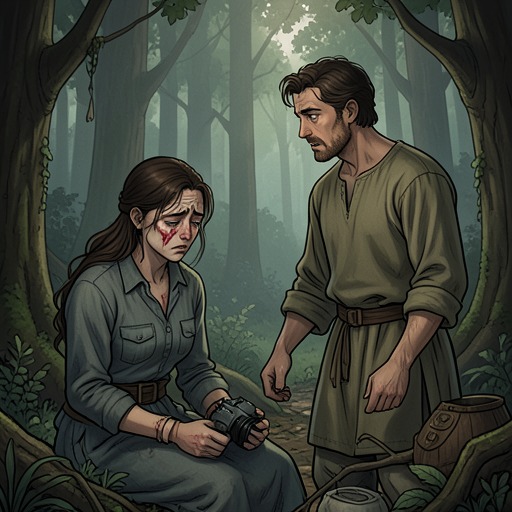
Ponniyin SelvanSundara Chozhar’s guilt and trauma over Mandhakini’s supposed death are presented as a long-running wound that distorts memory, unsettles sleep, and turns uncertainty into fear. For twenty-five years he has believed Mandhakini lost to him; when he learns she is alive, the revelation alters not only what he knows but the emotional meaning of the apparitions and imagined betrayals that have haunted him.
A Wound Sustained by Suspicion
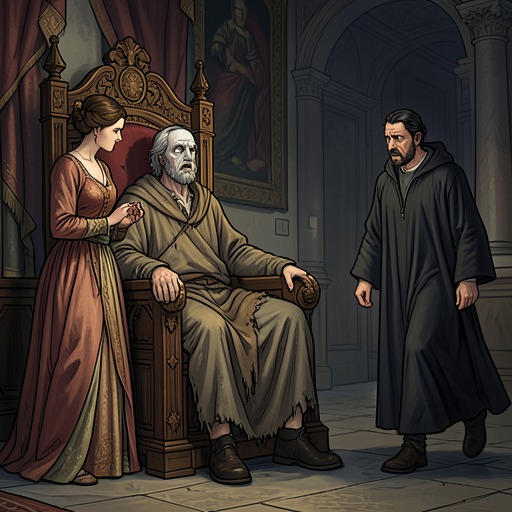
Sundara Chozhar’s distress is bound up with his sense that the people closest to him have withheld the truth. As Aniruddhar tries to reassure him, he describes himself as unable to find peace even in another birth, and suspects that his own children and trusted Chief Minister have conspired against him. Aniruddhar admits that reports were withheld to spare the king needless distress, while insisting that he has never intended harm. The exchange shows how the king’s private grief has become entangled with political mistrust: even a friend’s appeal to forty years of loyalty cannot immediately quiet his fears.
In this moment of suspicion, Sundara Chozhar singles out Vaanama Devi, the daughter of Malayaman, as the person he expects to remain beside him to the end. His words make their marriage a counterweight to his sense of betrayal, though they also reveal how precarious his confidence has become. The old grief does not remain a contained memory of Mandhakini; it colors his reading of present relationships and makes even the prospect of abandonment feel like confirmation of a life marked by wrongdoing.
The Past Returns in Sleep
After a night without sleep, Sundara Chozhar is finally overcome by exhaustion. The Thamizh verses sung by Poonguzhali and Azhwarkkadiyaan help lull him, but the resulting sleep is not restorative. His mind draws together events rooted in reality and images shaped by imagination, so that rest becomes another setting for the past to return. The dream’s changing scenes make clear that the wound has not settled into a safely distant memory.
In one scene, Sundara Chozhar sails with his family on the Kaveri in a decorated boat, listening to a choir. Alarm erupts when Arulmozhi Varman appears to be in danger in the river. Sundara Chozhar sees Mandhakini as the apparent threat and prepares to act, but recognition of her face overwhelms him; instead of diving in, he collapses in the boat. The scene is a dream, not an account of an actual attempt by Mandhakini to harm the child. Its importance lies in the reversal: the person he associates with loss reappears in the role of danger, and his body responds before he can master the fear. The imagined peril to his beloved son gives the old terror a new form.
Apparitions and the Question of Guilt
Awake, Sundara Chozhar continues to fear that Mandhakini’s presence is supernatural. When he senses someone near his bed, his thoughts turn to the possibility that she is a spirit who has returned to torment him. He imagines her appearing at night in finery, wonders whether she has haunted him before, and resents being left alone by Vaanama Devi, Kundhavai, and the attendants. The uncertainty of what he sees and when he has slept deepens his alarm; his mind cannot readily distinguish a present visitor from the feared return of the dead.
His fear quickly becomes an accusation against himself. He wonders whether he drove Mandhakini to her supposed death by demanding that she jump from the lighthouse, then questions whether he was responsible at all. These thoughts do not resolve into a settled account of what happened. Instead, they expose the instability at the heart of his grief: he alternates between blaming himself and disputing the premise of his guilt, while continuing to experience the consequences as immediate. The repeated possibility of seeing Mandhakini makes the past feel neither finished nor reliably understood.
Recognition and Partial Relief
When Sundara Chozhar is told that Mandhakini sought to reach him, he struggles to accept the explanation. He reasons that if she had wished to meet him, she could have found a way to do so at some point during the twenty-five years. He recalls believing that she wandered in Eezham while he lived in palace luxury, and recognizes that a mind burdened by guilt could make her image seem like a ghost. His question about how often he may have mistaken her for a spirit gives the years of separation a painful double meaning: he may have encountered her without knowing that she was alive.
The news that Mandhakini has survived brings a striking change. That night, for the first time in many nights, Sundara Chozhar feels genuine relief; the discovery removes the weight that had burdened his heart. The relief is joined by consolation that Arulmozhi Varman is staying at Nagapattinam, in the resilient Choodamani Viharam. News that Nandhini may be his daughter is startling, but its absurdity also draws an appreciative smile from him. His mood can therefore turn toward banter and conversation, including gentle teasing of Kundhavai and questions to Poonguzhali about Arulmozhi Varman. The change marks a release from the most oppressive certainty—the belief that Mandhakini was dead—not proof that every fear or unanswered question has been resolved.